
PVC Lamination Film: A Buyer's Guide to PVC Decoration Film
PVC lamination film is a decorative PVC-based surface layer that is bonded onto panels, boards and profiles to give them a finished face and a protective surface. The same material family is traded under many names — PVC decoration film, PVC foil, vinyl foil, PVC panel film, PVC ceiling film, calendered PVC film and profile wrapping PVC film. XHDeco, the export brand of Haining Xihe Decoration Material Co., Ltd., manufactures PVC lamination film as one of its main product lines. This guide explains what the material is, how it is specified, and how to qualify a supplier before a bulk order.
What PVC Lamination Film Is — and What It Is Not
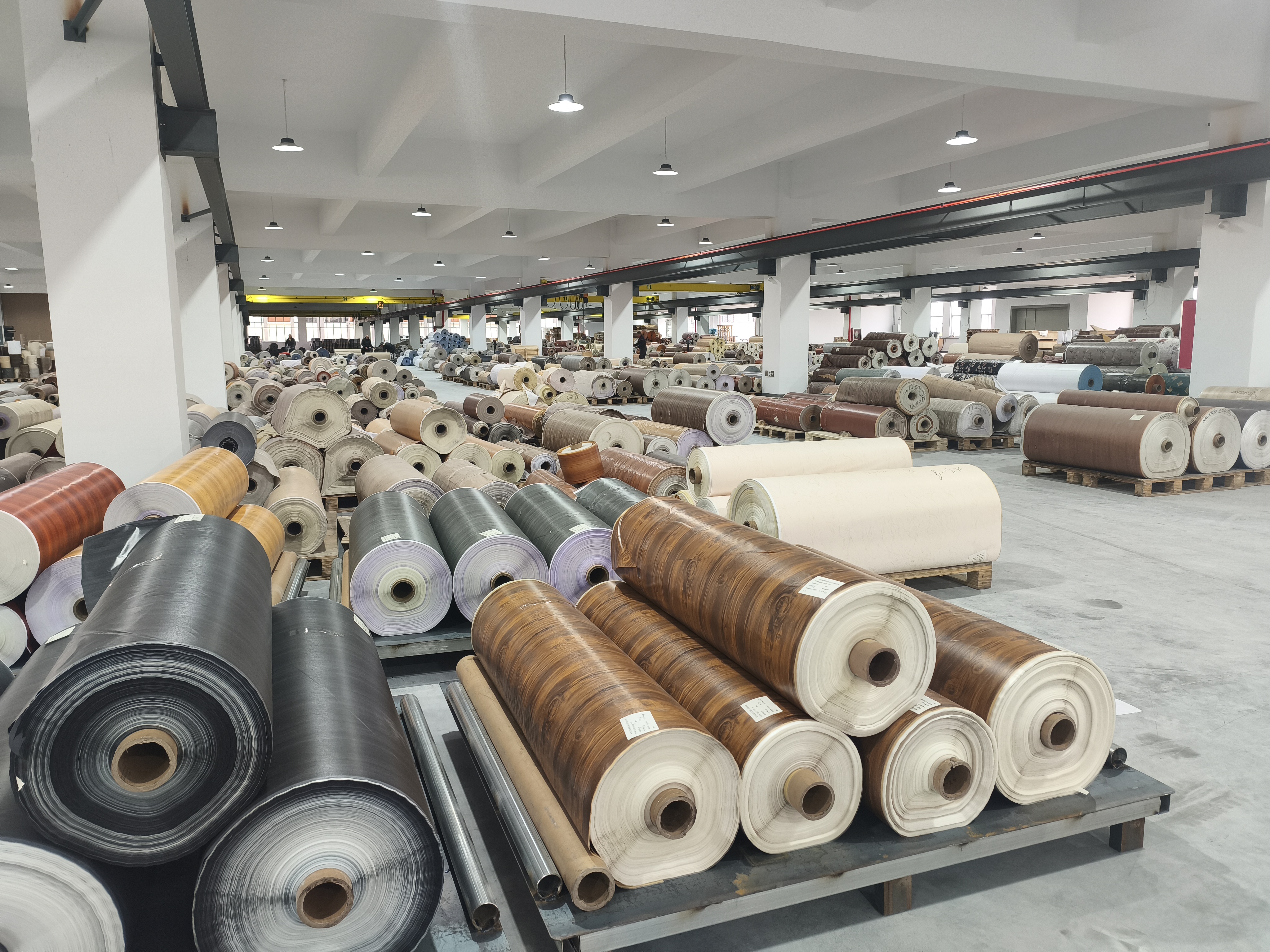
PVC lamination film is classified in supplier documentation as a lamination film and a PVC foil. It is a PVC-faced surface material that is laminated onto a substrate panel. Its function is twofold: it creates the visible decorative surface, and it protects the panel face underneath. XHDeco's current PVC film product is model LD-60139-9, positioned inside a model range that covers a wooden series, a marble series and a golden series. The film is made of PVC material and is supplied in 700 m rolls at 0.1 mm thickness in the wooden colour series. It is intended for the manufacturing industry and for lamination onto panels used in wall and ceiling decoration.
"PVC film" is a broad term, and not every PVC film is a decoration film. Clear rigid PVC film belongs to a different segment, supplied at 0.08 mm to 0.80 mm thickness with a maximum width below 1400 mm. UV-cut laminating film and cold-lamination graphic film are specified against different requirements again. Buyers comparing quotations should first confirm which segment they are being quoted in, because a thickness or price comparison across segments is not meaningful.
Industry Background: Why Decorative Film Demand Keeps Growing
Decoration film sits inside a much larger lamination film market. DataM Intelligence reports that the global lamination films market reached USD 6,842.11 million in 2024 and is projected to reach USD 11,630.04 million by 2032. The same source places Asia-Pacific as the largest regional block in 2024 with a revenue share of 36.87%, which is consistent with the concentration of PVC extrusion and calendering capacity in China and Southeast Asia.
On the downstream side, third-party research cited in the source material for this guide puts global installed PVC wall panel volume at 1.35 billion square feet in 2023. Because wall panels, ceilings, boards and profiles are the typical substrates for decorative film, panel demand is a useful proxy for film demand — but it is a proxy, not a direct measurement of decorative PVC film consumption.
These figures describe broader categories — lamination films overall and PVC wall panels — not decorative PVC lamination film alone. They are useful for market context, not for estimating the cost of an individual order.
XHDeco at a Glance: The Capability Behind the Film
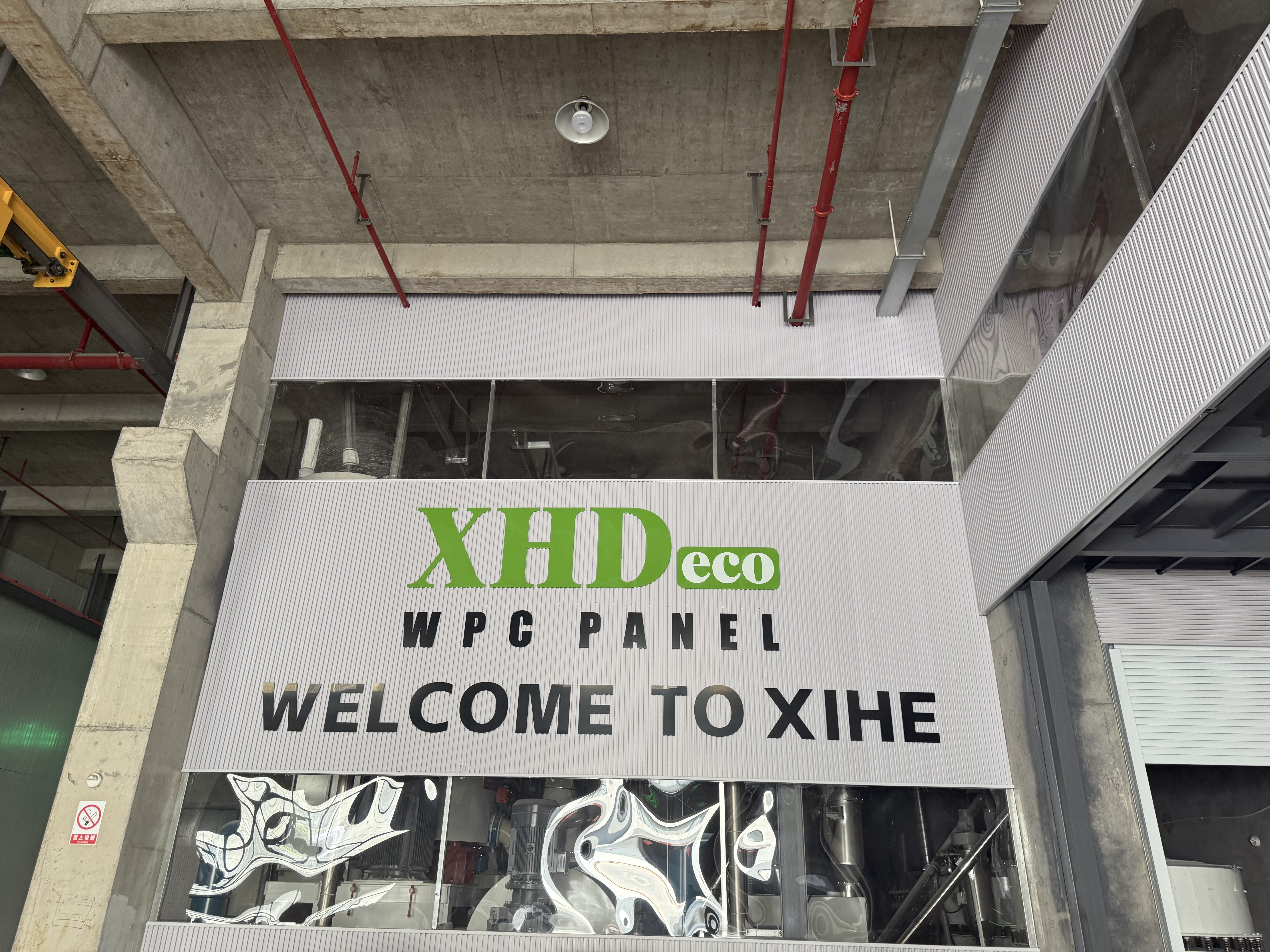
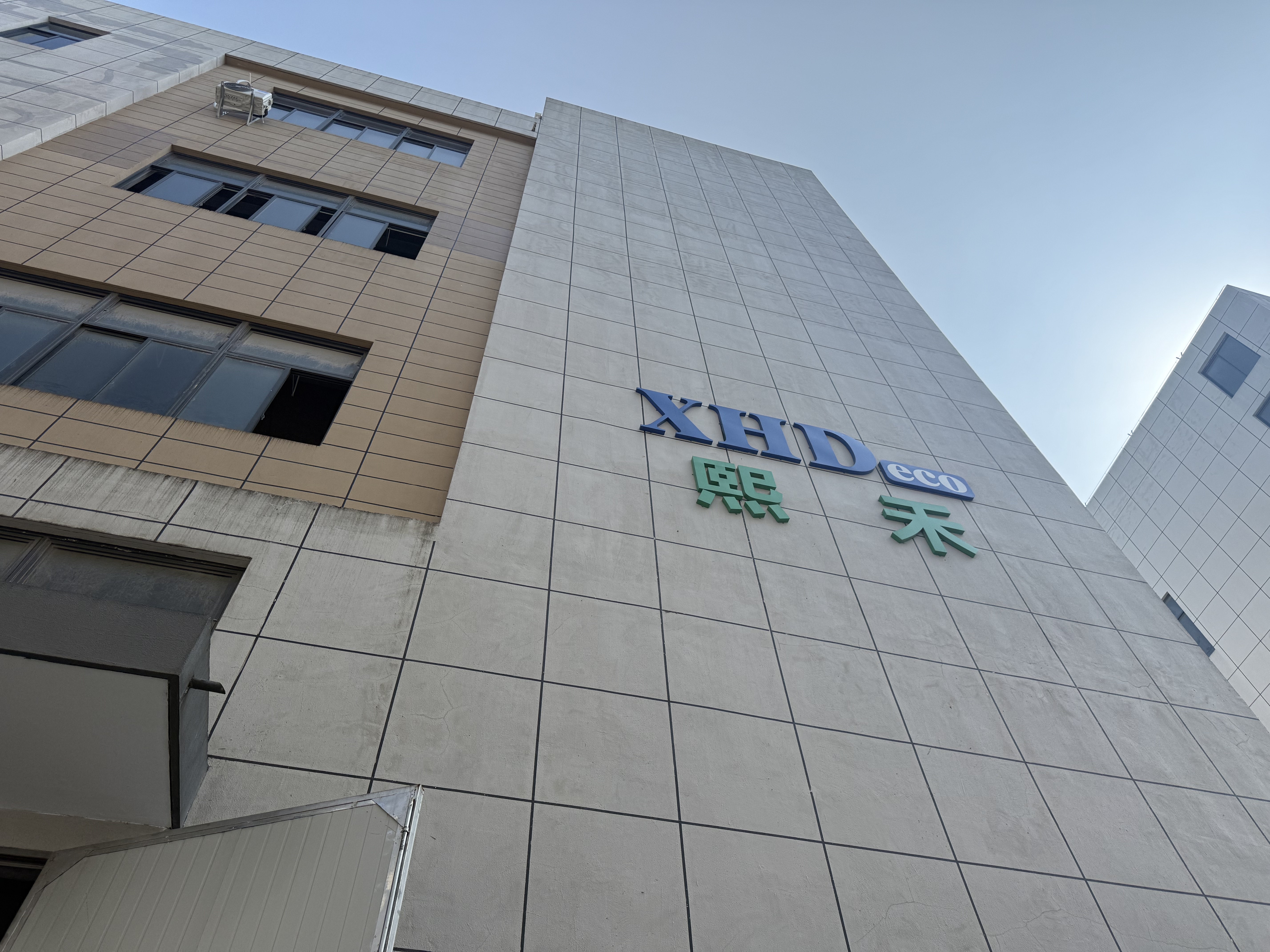
Haining Xihe Decoration Material Co., Ltd. was established in 2016 and integrates R&D, production and export of decorative wall-cladding materials. The company is located in Haining, Zhejiang, China, a well-known base for decorative building materials. Its manufacturing facility covers 6,000 square meters and employs approximately 50 staff, with an R&D team of 8 engineers. Annual production capacity is stated at 6000w units.
The factory is equipped with extrusion, lamination and surface treatment lines. That is the equipment set required for both volume production and customization, and the company supports mass production as well as customized sizes, wood-grain patterns and colour options. Export business accounts for 70% of total sales, and major markets include Southeast Asia (Indonesia, Philippines, Malaysia), the Middle East and South America. Products have passed relevant tests and are accepted by distributors, wholesalers and project clients across Southeast Asia.
The wider portfolio covers PVC wall panels, ASA co-extruded exterior cladding, PVC decorative film, WPC panels and decorative mouldings. For a film buyer, this matters for a practical reason: XHDeco also produces the panels that the film is laminated onto, so lamination behaviour is part of the company's own production knowledge rather than a purely theoretical claim.
How PVC Decoration Film Is Specified: Seven Steps
Step 1 — Define the substrate first
Substrate-specific decorative PVC film is supplied for PVC laminate sheet, SPC, bamboo charcoal fibre panel, carbon crystal panel, acrylic sheet, aluminium or GI sheet, plywood, MDF and WPC, according to supplier documentation reviewed for this guide. XHDeco's PVC film is applied to panels used for wall and ceiling decoration. The substrate decides heat sensitivity, surface condition and adhesion behaviour, so it drives every specification decision that follows.
Step 2 — Choose the lamination route and adhesive system
Documented adhesive categories for lamination are PVA glue (cold laminating), PUR glue (hot laminating) and pressure-sensitive adhesives. Adhesive selection varies with substrate, lamination process and application requirements. Cold-lamination product families are commonly described as using a pressure-sensitive acrylic adhesive. Bonding performance cannot be assumed from the film alone — it is a property of the film, the adhesive, the substrate and the line settings together.
Step 3 — Set thickness and width
Decorative film specifications published by suppliers are not interchangeable. One reviewed page lists decorative PVC lamination film thicknesses from 0.12 mm to 0.45 mm with widths of 1220 mm and 1260 mm, while the headline on the same page states an upper limit of 0.60 mm — an internal conflict that should be resolved in writing before an order is placed. XHDeco supplies its LD-60139-9 film at 0.1 mm. Thickness should only be compared within the same application, construction, adhesive system and test method; it is not a cross-category benchmark.
Step 4 — Select the surface finish
Published decorative finishes include high gloss, matte, super matte and soft-touch, while cold-lamination families are listed with gloss, satin and matte options. A super-gloss UV-cut lamination film is documented at 80 µm PVC film thickness with an acrylic adhesive. Finish affects reflectivity, how scratches and fingerprints read in service, and how demanding the finished surface is to maintain.
Step 5 — Choose pattern and colour direction
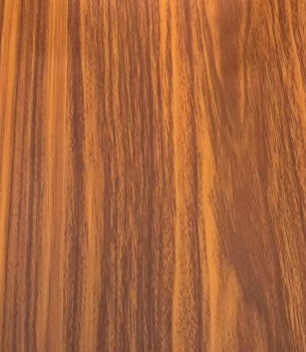
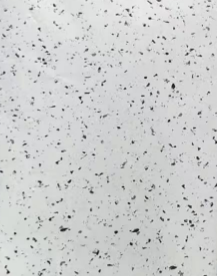
XHDeco's model range covers wooden, marble and golden series, with the current LD-60139-9 film supplied in the wooden colour series. The company supports customized sizes, wood-grain patterns and colour options; customized length and surface film design are available, and a custom colour requires a minimum order quantity. Pattern continuity across panel joints is worth testing at sample stage, because decorative film is judged as a finished surface, not as a roll.
Step 6 — Confirm roll length, packing and order structure
Reviewed supplier pages list roll lengths from 100 m per roll to 400 m per roll; XHDeco supplies its LD-60139-9 PVC film in 700 m rolls. Roll length is not a detail to leave to the packing list — it affects line changeover frequency, warehouse handling and freight efficiency. XHDeco's stated minimum order quantity is 1 x 20GP container, with mixed colours and mixed profiles acceptable within one container, and small trial orders negotiable.
Step 7 — Qualify with samples and documentation
Because adhesive and finish performance depend on the buyer's substrate and equipment, the specification that matters is the one proven on the buyer's own line. Sample validation and test documentation should be completed before a container-scale commitment. The next section covers what to ask for.
Where PVC Decoration Film Is Used
Wall and ceiling surfaces are the primary documented applications. XHDeco's PVC film is a PVC-faced panel surface material intended for wall and ceiling decoration, and typical application scenarios are interior wall panel and ceiling panel surface finishing. Beyond that, the category is supplied under end-use names: PVC film for wall panel, PVC ceiling film, PVC panel film, PVC furniture film, PVC film for plywood, PVC sheet film, flat-lamination film, profile wrapping PVC film, vacuum forming PVC film, PVC self-adhesive film and PVC membrane. These are naming conventions for the same material family, and each one still has to be specified by substrate, thickness, finish, adhesive system and colour.
- Interior wall panels and ceilings — decorative covering and surface protection, matched with stainless steel buckles, screws and adhesive sheets as accessories. XHDeco notes that its panels can be installed directly on rough walls using supporting stainless steel buckles and screws.
- Board and plywood surfaces — plywood and MDF appear in the published substrate list for decorative PVC lamination film.
- Composite and panel systems — SPC, WPC, bamboo charcoal fibre panel, carbon crystal panel, acrylic sheet, and aluminium or GI sheet are also listed as substrates.
- Furniture and profile surfaces — flat-lamination and profile wrapping variants are supplied for these uses under the corresponding product names.
- Project interiors — residential, commercial spaces, hotels, retail and renovation projects are the documented project types, where film is chosen for waterproof and moisture-proof performance, colour range and low maintenance cost.
PVC Film Types Compared: Published Specifications
The table below collects specifications published by suppliers and by XHDeco. It is a reference for reading quotations correctly, not a ranking.
| Film / product type | Published thickness or dimensions | Published construction / finish | Source context |
|---|---|---|---|
| Decorative PVC lamination film (supplier-listed range) | 0.12–0.45 mm listed thicknesses; widths 1220 mm and 1260 mm | Roll length 100–400 m; high gloss, matte, super matte and soft-touch finishes | Supplier product documentation (LCL Films). The same page headlines 0.60 mm, which conflicts with its detailed list. |
| Super-gloss UV-cut lamination film | 80 µm PVC film | Acrylic adhesive | Supplier product page (FilmManufacturer.com) |
| PVC cold-lamination film | Not stated in comparable terms | Pressure-sensitive acrylic adhesive; gloss, satin and matte finishes | Supplier product page (DER Factory) |
| PVC floor-graphic cold-lamination film | 0.18–0.22 mm; 0.20 mm | Product-family specific | Supplier specifications (DER Factory) |
| Clear rigid PVC film | 0.08–0.80 mm; width below 1400 mm | Rigid, non-decorative segment | Supplier page (SDZL Plastic) |
| XHDeco PVC film, model LD-60139-9 | 0.1 mm thickness; 700 m roll | Lamination film / PVC foil; wooden colour series within a wooden, marble and golden series range | XHDeco product data |
These products sit in different segments and are not directly comparable. They must not be combined into a single industry thickness range.
Frequently Asked Questions
1. What test documentation should I check before buying PVC lamination film?
Ask for the test documentation that applies to the specific film and the intended environment. XHDeco states that it holds SGS test reports covering safety and formaldehyde and fire-related testing. Fire resistance and formaldehyde safety should be referred to those SGS test reports, and the exact grades and suitable environments need customer confirmation — they should not be assumed from a general product description. On the customs side, the US Harmonized Tariff Schedule entry 3920.49.00.00 covers non-adhesive plates, sheets and film of polymers of vinyl chloride, which is the reference point importers use for classification; treatment varies by destination market, so confirm with your customs broker.
2. Can a manufacturer supply both standard and customized PVC decoration film?
XHDeco supports mass production as well as customized sizes, wood-grain patterns and colour options. Customized length and customized surface film design are available, and a custom colour requires a minimum order quantity. The supporting capability is a 6,000 square meter facility with extrusion, lamination and surface treatment lines, approximately 50 staff, an R&D team of 8 engineers and a stated annual production capacity of 6000w units. When requesting customization, specify substrate, thickness, width, finish, colour or pattern direction and roll length together, because these variables are quoted as a set rather than individually.
3. What drives the cost of a PVC lamination film order?
Cost is driven by the specification variables, not by the product name: film thickness, width, surface finish, adhesive system, colour or pattern, roll length, and the order structure. A published benchmark for the PVC-film-laminated metal sheet segment — a different segment from decorative panel film — puts the average selling price at approximately US$1,312 per ton in 2025. That figure is context for how the category is priced in published research, and it is not a quotation for decorative PVC lamination film. Decorative film is normally quoted per order against a confirmed substrate, thickness, width, finish and quantity, so the practical way to compare suppliers is to issue a fully specified RFQ to each one rather than comparing headline prices.
4. How do I validate PVC lamination film before placing a bulk order?
Validate on your own substrate and your own line. Request samples, laminate them using the adhesive and process you intend to run, and check adhesion, surface appearance, pattern continuity across joints, and finish behaviour. Because adhesive selection depends on substrate, process and application requirements, a sample that performs on one substrate does not automatically transfer to another. For commercial validation, XHDeco's stated minimum order quantity is 1 x 20GP container with mixed colours and mixed profiles acceptable within one container, and small trial orders are negotiable.
5. What determines lead time for a PVC film order?
Lead time follows order structure. The drivers are order quantity and container basis, the degree of customization — custom colour, pattern or size — and production scheduling against confirmed specifications. XHDeco states that it offers stable lead time, competitive FOB pricing and flexible payment terms for bulk orders, and products have passed relevant tests and are accepted by distributors, wholesalers and project clients across Southeast Asia. Because lead time is quoted against a confirmed specification, the fastest route to a firm date is to send the substrate, thickness, width, finish, colour and quantity in one message. You can request a sample or a quotation directly from XHDeco's export contact, Ealine, by email at 834832100@qq.com or on WhatsApp at +86 18858307144.
Conclusion: Specifying Film as a Surface, Not a Commodity
PVC lamination film is easy to describe and difficult to buy well, because the same product name covers decorative film, UV-cut film, cold-lamination film, rigid clear film and profile wrapping film. The specification that works is the one built from the substrate outward: substrate, then adhesive and lamination route, then thickness and width, then finish, then pattern and colour, then roll length and order structure — validated on samples before a container is committed. Buyers who work in that order get comparable quotations; buyers who compare on price per metre alone end up comparing different products.
Next Step: Sample, Quotation or Company Profile
XHDeco supplies PVC lamination film in a wooden, marble and golden series range, with customized sizes, wood-grain patterns and colour options. Send your substrate, required thickness, width, finish and quantity, and request a sample for line testing.
- Contact: Ealine
- Email: 834832100@qq.com
- Tel / WhatsApp: +86 18858307144
- Address: 16th building, No.1 Weiye Road, Yuanhua Town, Haining City, Zhejiang, China
- Website: xihe-decoration.com
- Company profile download: Xihe Company Profile (PDF)
This guide is written for buyers at awareness and research stage. Market figures referenced above are attributed to the third-party research and supplier documentation named in the text; product-specific specifications should be confirmed in writing at quotation stage.
Have Questions or Need More Details?
Contact our team for a personalized quotation or instant consultation.
Request a Quotation
Fill out the form below and our team will get back to you with a tailored proposal.
WhatsApp Direct Chat
Prefer to chat in real-time? Message us on WhatsApp for instant assistance & quick answers.
- Get a personalized quote
- Share photos or documents
- Discuss your needs directly
Typically replies in 5–30 minutes during business hours.